Quick answer
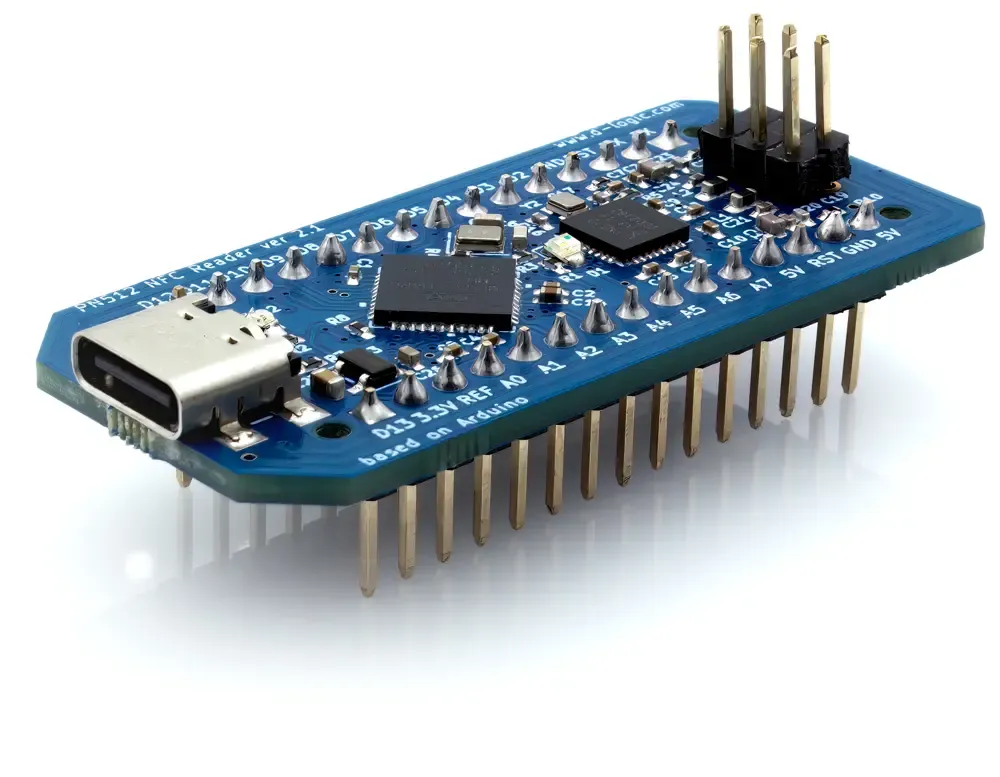
Breadboard MFRC522 jumper-wire setups simplify day-one Arduino experiments, but loose SPI wiring and bare hobbyist boards complicate pilot builds. PR-601 (`Integrino N512`) consolidates an Arduino-Nano-compatible MCU and PN512 RF front-end onto one USB board for clean R&D benches, while Linux/Windows production equipment should transition to host-managed USB OEM modules (`PR-106` SDK or `PR-203` PC/SC).
The worked examples explain software handling. They are not reader measurements or proof of card authentication. Sources and scope · Read our editorial method
Separating MCU sketch experimentation from commercial host-driven NFC modules saves firmware rewrites before pilot manufacturing.
Choose the right hardware stage from lab bench to production BOM
| Catalogue model | Architecture | Software library / API | Target project phase |
|---|---|---|---|
| PR-601 | Single-board Arduino + PN512 USB | Arduino sketch (MFRC522_PN512 library) |
Lab proof-of-concept, teaching & MCU logic tests |
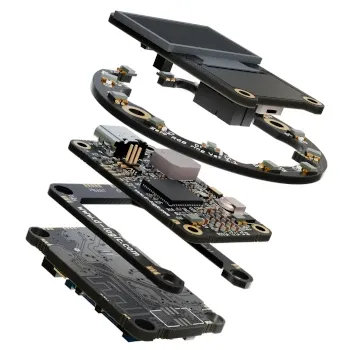
| PR-106 | Unhoused USB OEM module | Host C/C++/Python/C# uFCoder SDK |
Commercial Linux/Windows machinery needing native SDK |
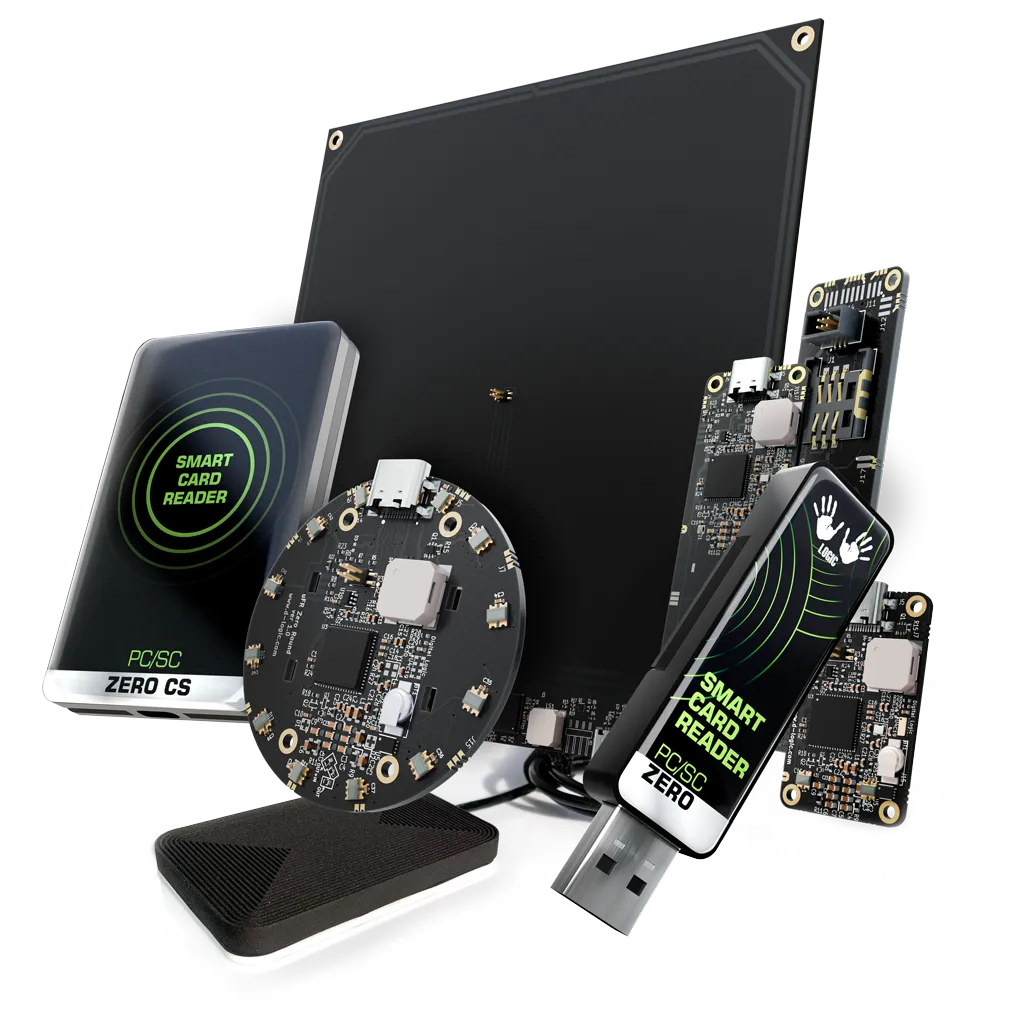
| PR-203 | Unhoused USB OEM Standard | OS PC/SC (WinSCard / pcsclite) |
Commercial kiosks & lockers using standard APDUs |
Four engineering checks when moving from prototype to pilot run
- Verify card standard scope early:
PR-601targets ISO/IEC 14443 A/B and ISO/IEC 18092 sketches; if your commercial product also needs ISO/IEC 15693 vicinity tags, move directly toPR-106orPR-203. - Check actual
MFRC522_PN512repository examples for your specific card command rather than assuming high-level cryptographic helpers exist in Arduino sketches. - Replace breadboard jumper wires before enclosure RF testing—single-board
PR-601or dedicated OEM modules (PR-106/PR-203) give repeatable antenna geometry. - When transitioning to
PR-106orPR-203, note that the catalogued pages cover USB OEM configurations; request a variant check if your custom carrier board requiresTTL UART.
Compare development boards and commercial OEM modules
Browse NFC development boards, review the PR-601 Arduino PN512 board and PR-106 OEM module, or request a PR-601 evaluation unit.
Official references and scope
Verify pin assignments, voltage levels and open-source sketch coverage before connecting external actuators or committing to production PCB layouts.
Questions to consider
Why use PR-601 instead of a separate Arduino board wired to a loose MFRC522 breakout?
PR-601 integrates the microcontroller and PN512 transceiver on one PCB with USB, eliminating flaky SPI breadboard jumpers during firmware development.
Should we ship Arduino sketch firmware inside a Linux or Windows kiosk?
Usually no. When a Linux or Windows host is already present, PR-203 (PC/SC) or PR-106 (manufacturer SDK) avoids maintaining separate custom MCU firmware in production.